Buddhist Remains లేబుల్‌తో ఉన్న పోస్ట్‌లను చూపుతోంది. అన్ని పోస్ట్‌లు చూపించు

3, సెప్టెంబర్ 2015, గురువారం

Krishnapuram: Buddhist Rock cut Cisterns near Padmanabham

A Buddhist ruin site is located at Krishnapuram village near Padmanabham in Visakhapatnam district of Andhra Pradesh. The site is located on a 50 meter high flat terraced hillock.

Satellite Imagery of Krishnapuram Buddhist site (in yellow)
(Coordinates: 17°59'15"N   83°20'57"E)

This site was explored by me(N. Aditya Madhav) on 19th August 2015 and a team of historical enthusiasts visited the site on 23rd August 2015. The site Photographs were observed by freelance archaeologists and was identified as a site in connection to rock cut cisterns to store rain water during Buddhist times, mostly contemporary with nearby sites of  Pellikonda, Pavurallakonda, Cherukupalli and Gudiwada dibba.

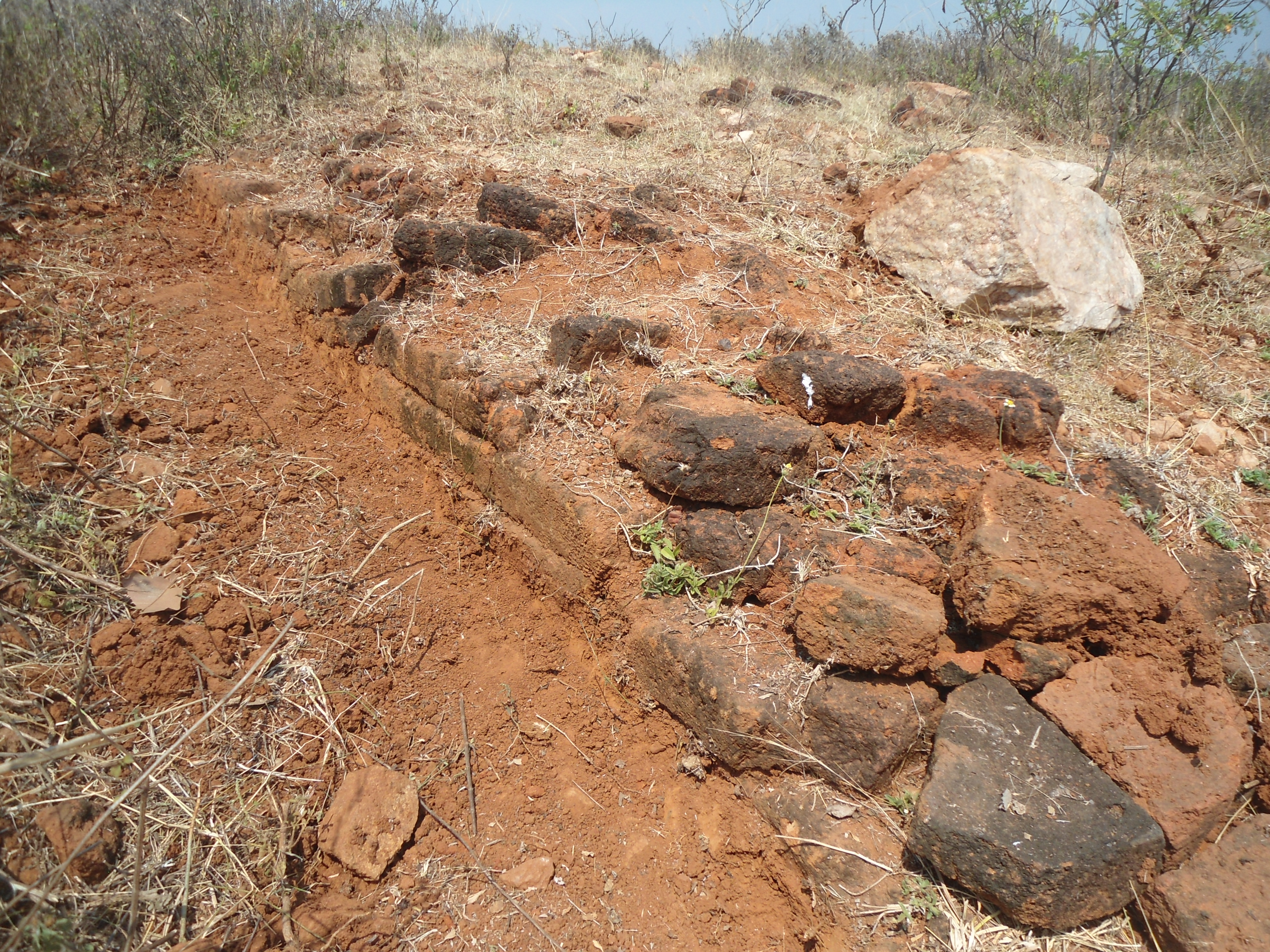
Traces of a Rock cut cistern

Some traces of rock cut cisterns, water channel were found towards west side of the hillock facing the river Gosthani, which is 0.5 KM away. There was a small drain towards the foot of the hill, which merges into the river Gosthani. 

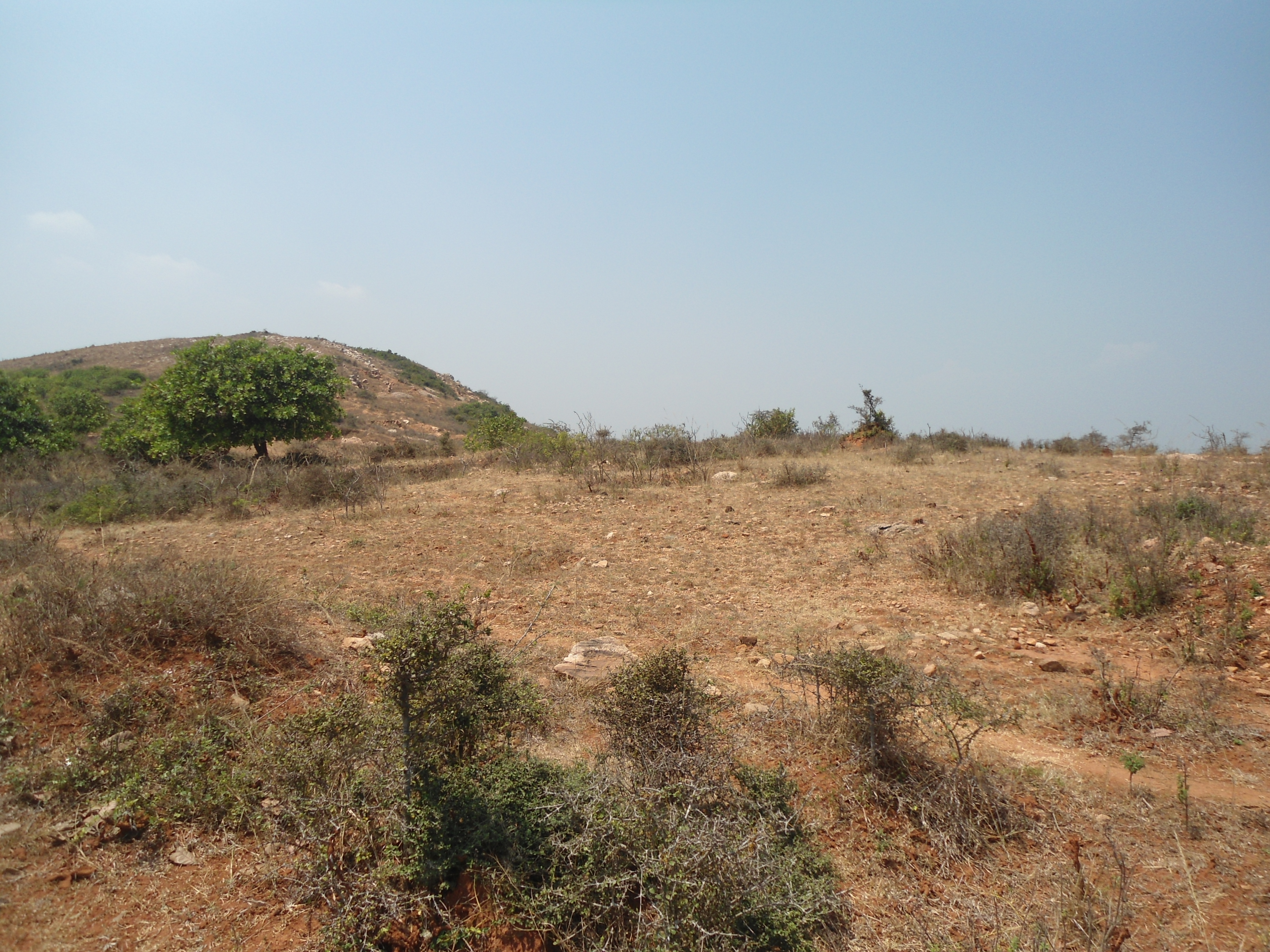
View of the Hillock

Historical Enthusiasts at the Site
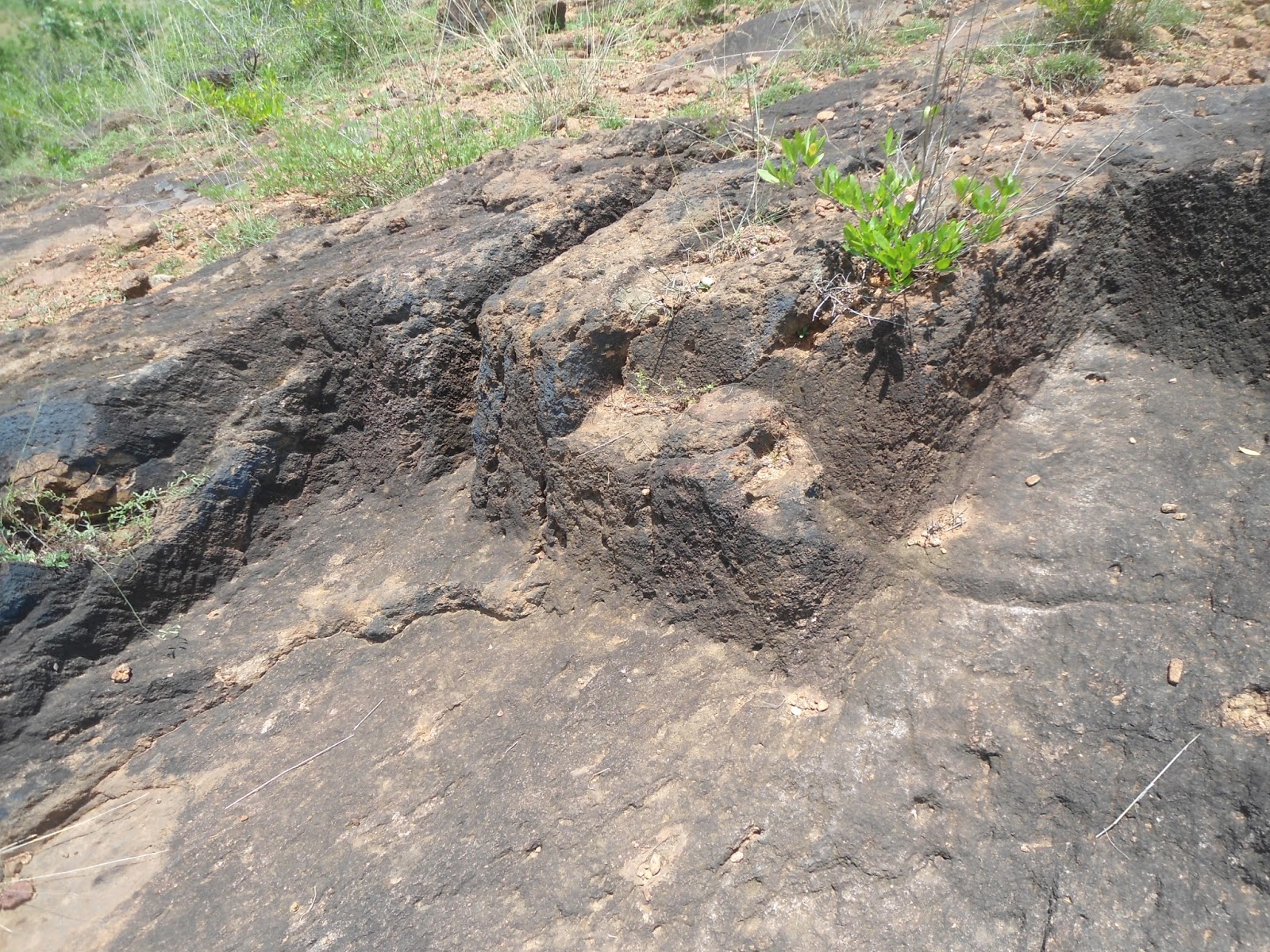
Another Rock cut cistern and channel on the hillock

The rock cut cisterns were filled with gravel and we were unable to detect the exact shape or cluster. This site is on the opposite side of Pellikonda Buddhist site. A letter has been sent to the concerned state archaeological authorities to confirm the date of the site. Hope this site gets some attention and goes through detailed exploration very soon.

Help Save Historical Sites of North Coastal Andhra

5, జులై 2014, శనివారం

Pellikonda: Boomerang shaped Buddhist site

Buddhist Ruin site of Pellikonda is located near Mukundapuram and Reganigudem village's in Anandapuram mandal, Visakhapatnam district, Andhra Pradesh. As seen from a satellite image the low level Hilltop (50 M) looks like a boomerang in North east to South west orientation.

Satellite Imagery of Pellikonda Buddhist site
(Coordinates: 17°56'53"N   83°19'44"E) 

This site was first explored in 1990's by the State Archaeology Department of Andhra Pradesh and was just left with a documentation and no traces of security are found at the site. As per the observations and data from historians the site may be dated back as a contemporary of  Pavurallakonda and other Early Buddhist sites near Bheemunipatnam and Visakhapatnam.

Outline of Stupa Brick Remnants at Pellikonda

During an exploration by historical enthusiasts and freelance archaeologist's in April 2013, Brick remnants, potsherds and columns were found scattered on the flat terraced area towards North east of the Hillock. 

View of Pellikonda Buddhist site

Potsherd at Pellikonda Buddhist Site

Large Bricks of dimensions 23 x 10 Centimeter were found at the site. Most of the area was vandalized by Cashew plantations. An extensive study and exploration is needed urgently to preserve and protect this early historic Buddhist site along Gosthani river basin, which is contemporary to Pavurallakonda, Thotlakonda and Bavikonda Buddhist sites in Visakhapatnam district.

Brick sized  23 x 10 Centimeter at Pellikonda

Help Save Historical Sites of North Coastal Andhra

20, మార్చి 2013, బుధవారం

Gudiwada Dibba: Buddhist site on the banks of Gosthani

Gudiwada Dibba is a small hillock at Gudiwada village in Bhogapuram mandal, Vizianagaram district, Andhra Pradesh. It located on the banks of River Gosthani. This village is geographically located towards north of Tagarapuvalasa town but politically located in Bhogapuram mandal.


A small hillock with semi terraced area  is located on the banks of the river Gosthani at Gudiwada village. It consists of two Hindu temples at present but is full of Buddhist Remains scattered all over the hilltop terraced areas along with rock cut steps to the river on the west side of the hillock. This site would have flourished as a Hinayana Buddhist site from 2nd century BC to 3rd century AD.

Stupa Mound


Stupa Outline Bricks

The Hillock is formed as 2 flat terraces:
The upper terrace towards East consists of Buddhist Stupa (Possible Apsidal Stupa) remnants and a small rock cut cistern.
The lower terrace towards West consists of Buddhist Vihara remnants
Rock cut steps are present towards River Gosthani at the west end of the hillock.

View from Stupa Mound

Rock cut Steps

This site has some resemblance to Pavurallakonda and Thotlakonda Buddhist site in the near Vicinity. It is 6 KM away from Bheemunipatnam. Many Brick remnants are found scattered on the terraced area of this hillock. It would have served as a junction point and navigational point through the waters of River Gosthani and Bheemunipatnam sea routes. The absence of Buddhist Sculpture shows the possibility of an early Buddhist settlement at this place.

Rock cut Cistern


Explorations on this hillock (Gudiwada Dibba) during October 2012 yielded an ancient Buddhist heritage site possibly of 2nd Century BC. The site was documented by the State Archaeological department of Andhra Pradesh. The Excavations are yet to start at this ancient Buddhist site.

Brick Remants

The details of this site with evidences was provided by me(N Aditya Madhav) in 2012 to the State Archaeological department. This site was explored by me and my brothers (Pranav , Naveen) in 2011 under the study project BIRHAJ (Buddhism, Its Resemblances with Hinduism And Jainism).

The Terraced site at Gudiwada Dibba

12, జనవరి 2013, శనివారం

Pavurallakonda Buddhist Ruins Photo Calender 2013


A Monthly Photo Calender of Pavurallakonda Buddhist Monastic Ruins at Bheemili in Visakhapatnam district, Andhra Pradesh, India.

Pavurallakonda or Pavurallabodu is the local name of a hill, popularly known as Narasimhaswamy konda, near Bheemunipatnam about 25 km towards North from Visakhapatnam city. It is located at a height of about 150 meters above mean sea level. It consists of a ruined hill top Buddhist Monastic Complex probably witnessed human habitation from 3rd Century BCE to 2nd century CE. It is one of the Largest Buddhist Monasteries of North Coastal Andhra Region. Hinayana Buddhism must have flourished at this hill-top site.


Note: Click on the image for full resolution and save the image :) 
Happy New Year 2013


Ruined Buddhist Relief

Rock cut Steps

Rock cut cistern {small}

Ruined stone pillar

Votive Stupa

Vihara

Rock cut steps to a Cistern {medium}

A Cistern

One among the 16 rock cut cisterns

Ruined Buddhist relief

Large rock cut cistern

Votive stupa remnants

2, జనవరి 2013, బుధవారం

Bavikonda Buddhist Ruins Photo Calender 2013

A Monthly Photo Calender of Bavikonda Buddhist Monastic Ruins at Visakhapatnam, 
Andhra Pradesh, India.


Bavikonda Buddhist Complex is about 16 km from Visakhapatnam city on a hill about 130 meter above Mean Sea Level. The term Bavikonda in Telugu language means a hill of wells. As per its name, Bavikonda is a hill which has wells for the collection of rainwater. Bavikonda Monastery dates back to the 3rd century BCE.

Note: Click on the image for full resolution and save the image :) 
Happy New Year 2013


View from an Apsidal Stupa at Bavikonda

Brick Remnants on a Votive Stupa

Stone path at Buddhist Viharas

Rock cut and Stone path

Maha Stupa and Stone Stupa view

Maha Stupa at Bavikonda

Rock cut steps at Viharas

Interior hall of Apsidal Stupa

Top view of a Votive Stupa

Stone Stupa at Bavikonda

Vihara Remnants at Bavikonda

A Votive Stupa at Bavikonda

19, సెప్టెంబర్ 2012, బుధవారం

Madhavadhara: A Buddhist Site Near Simhachalam

 Madhava swami temple, Madhavadhara, Visakhapatnam


This temple is adopted by Simhachalam Temple.
It is located on the south foot hill of Simhachalam.
The diety is Madhava Swamy and the water jet flow here is known as Madhavadhara,
from which the locality got its name.
Some people prefer to take a holy bath in holy dharas (Madhavadhara).


Buddhist settlements on Simhachalam hill-range has come to light during a recent renovation and restoration works taken up by the Endowments Department. This site is presently Documented by the state Archaeology department and study of the site is in progress.


Coming to the point the sand blasting and restoration works on Chalukyan period Madhava Swamy Temple at Madhavadhara was completed recently, which not only exposed the intrinsic fine sculpting legacy of 14th Century A.D., but also some other interesting facts about the construction of the original temple on the base of Buddhist Vihara. The khondalite rocks(available on Eastern Ghats) are used for building the temple along with the Buddhist bricks from the vihara. These two (stones and bricks) possess the same color in general.

 The rock and Brick alignments at Madhavadhara.
 Bricks estimated to be from 3rd Century B.C. are now lying in a heap alongside the temple towards south


These bricks measured 52 cm X 28 cm X 8 cm, with structural characteristics of the bricks used in Buddhist sites in and around Visakhapatnam coastal region. A researcher in Buddhist sites of north Andhra Pradesh, he said there were foundation walls of a Buddhist vihara in the close vicinity.


 Bricks estimated to be from 3rd Century B.C. are now lying in a heap alongside the temple, as the mast is being rebuilt with cement concrete. These Brick remnants are found scaterred from the first tier to the foot tier of the present temples at Madhavadhara.


The possible Buddhist site would have been a  4 -Tier semi terraced Buddhist Monastery  as Remnants of chamber for monks to stay was found between the Mallikarjuna Swamy and Madhava Swamy temples that even today remain unexposed to the world due to several reasons like paucity of manpower and lack of will power among local administrators to permit the work.

 The natural water from the hill to ground at Madhavadhara

One can enjoy the natural beauty of this ancient site and surroundings,
unfortunately the steps way towards Simhachalam is becoming a garbage day by day in the name of rituals
Temples from Madhavaswami Temple below.

Very frequent buses are available from all parts of Visakhapatnam. (Bus no: 48A
 REFERENCE: Article in THE HINDU about Buddhist Site Remains dated